
New Year's Eve in Munich – Festive Moments Maria Stuarda & Die Fledermaus
A glittering turn of the year in Munich: at the Bavarian State Opera, "Die Fledermaus" delights with Viennese esprit, while Donizetti's "Maria Stuarda" captivates the audience with its dramatic intensity. A stylish New Year's Eve dinner completes the cultural experience. Cultural highlights in a festive Munich setting.
Dates and prices





- 2026

| 29.12. - 01.01.2027 | Di. - Fr. | from CHF 2'528.- |

Day 1: Switzerland – Munich
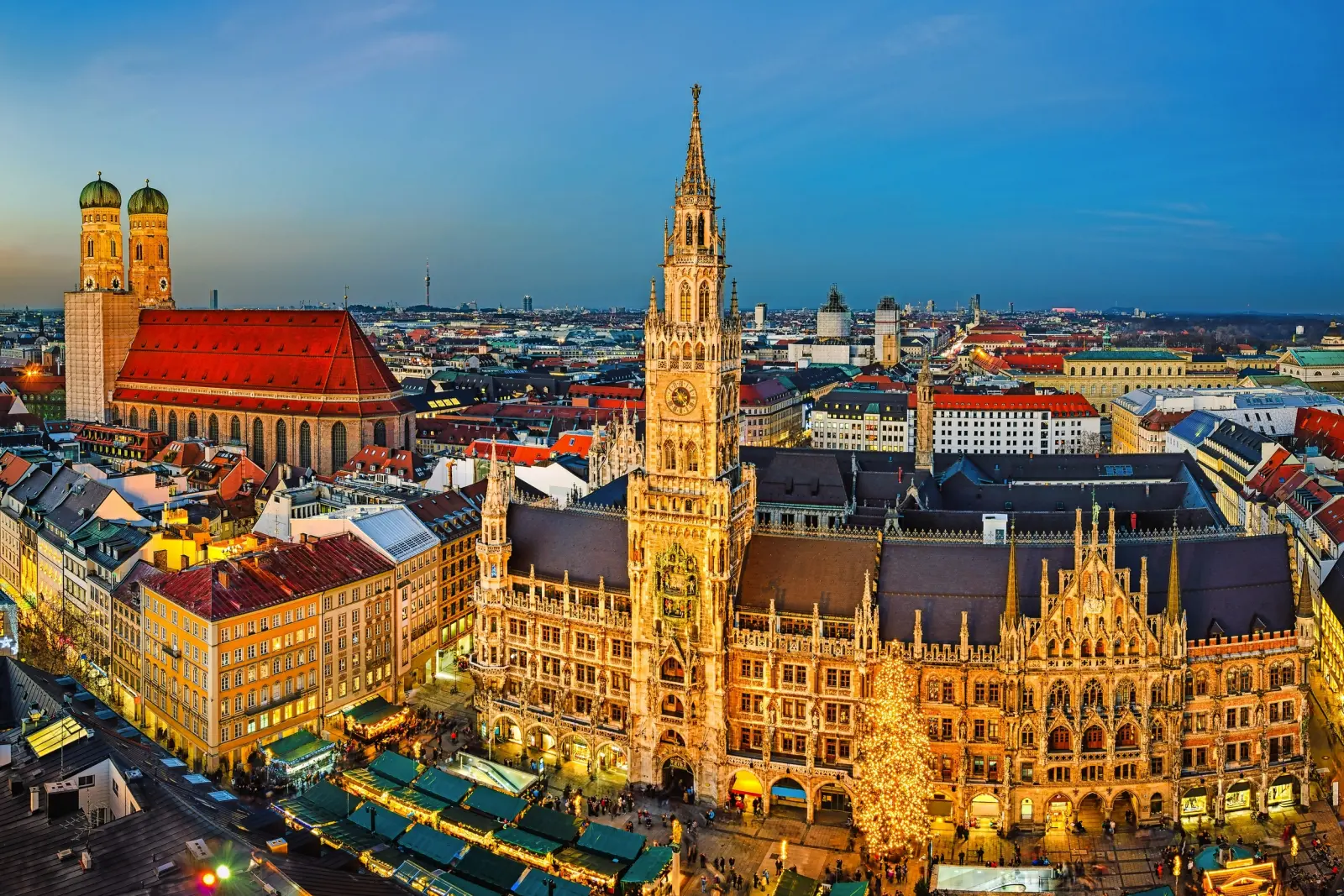
Journey via Memmingen to Munich, arriving in the early afternoon. Your excellent hotel is located in the heart of Munich's old town. Exclusive group dinner in a carefully selected restaurant.
Day 2: Munich & Opera
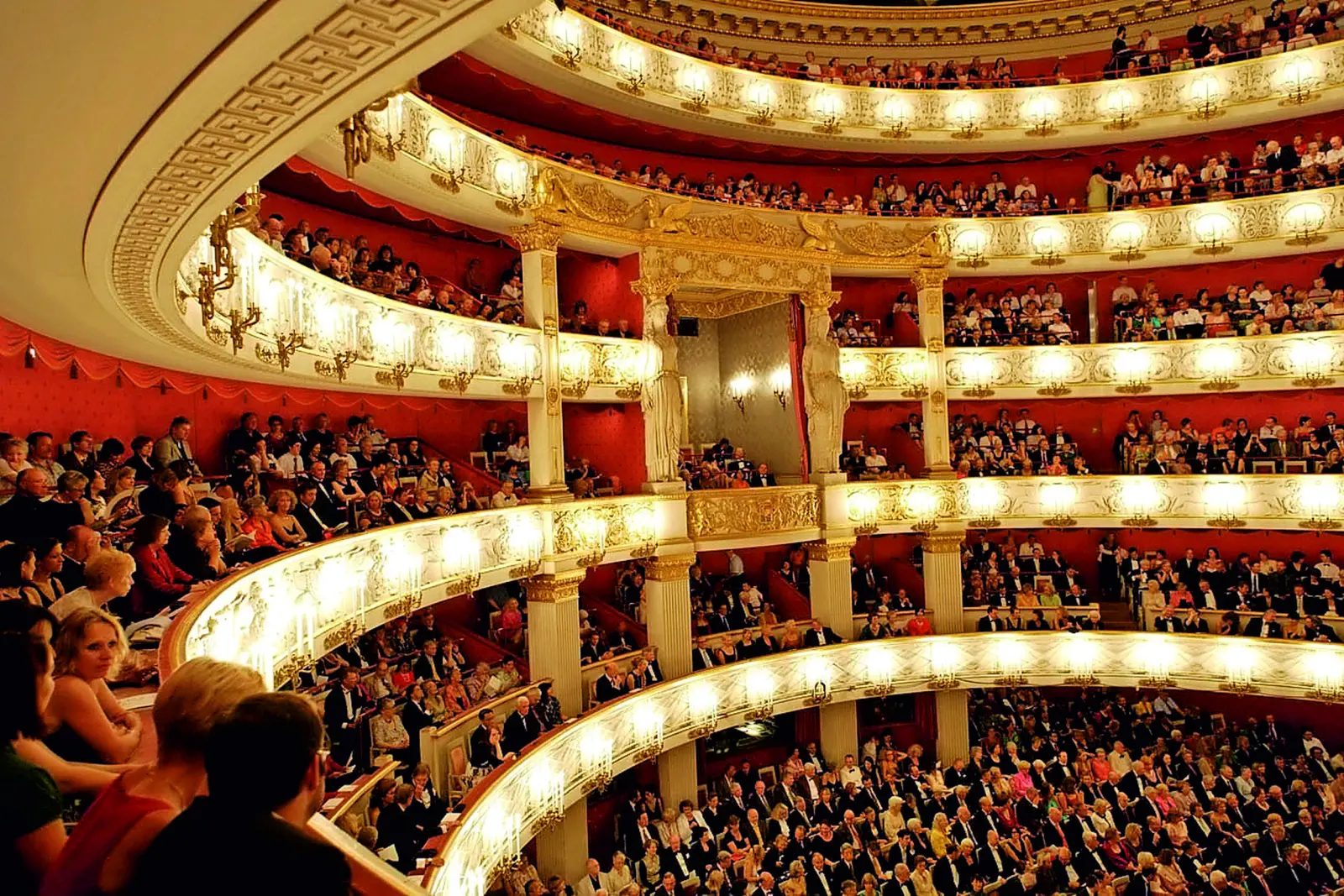
City tour of the former royal capital and its sights. Free afternoon. In the evening, a visit to the opera "Maria Stuarda", a moving bel canto opera about the power struggle between Mary Stuart and Elizabeth I of England.
Day 3: Munich & Operetta
Begin the day with a lovely breakfast at the hotel, then spend it as you please. A stroll through the English Garden, a museum visit or some shopping all suggest themselves. Look forward to the evening with the operetta "Die Fledermaus" at the Bavarian State Opera. Afterwards, enjoy your New Year's Eve dinner at the Spatenhaus restaurant next to the opera house.
Day 4: Munich – Switzerland
At around 11.00 you begin your return journey to Switzerland, with many fond memories of the highlights of this trip.
CarRouge
The Premium vehicles are state of the art and offer generous space: 3 luxury seats per row, individually adjustable headrests and an interior height of 2.10 m create a unique sense of space.
- 30 wide, luxurious Premium armchairs in a 2+1 seating layout
- Generous seat pitch of 90 cm
- Seat belts at every seat
- Height-adjustable footrest, adjustable backrests and armrests
- A unique sense of space thanks to an interior height of 2.10 metres
- Multichannel sound system at every seat, lane assist and adaptive cruise control
- Free Wi-Fi/internet in Europe


INCLUDED
- Journey by Car Rouge, 2+1 seating
- Music tour manager from/to Switzerland
- Accommodation at the 4* Hotel Platzl
- 3 x bed and breakfast (room/breakfast buffet)
- 1 x New Year's Eve dinner incl. drinks
- 1 x gourmet dinner in a restaurant
- 1 x opera ticket, category 1
- 1 x operetta ticket, category 1
- City tour and walking tour
- Car Rouge audio system
Hotels
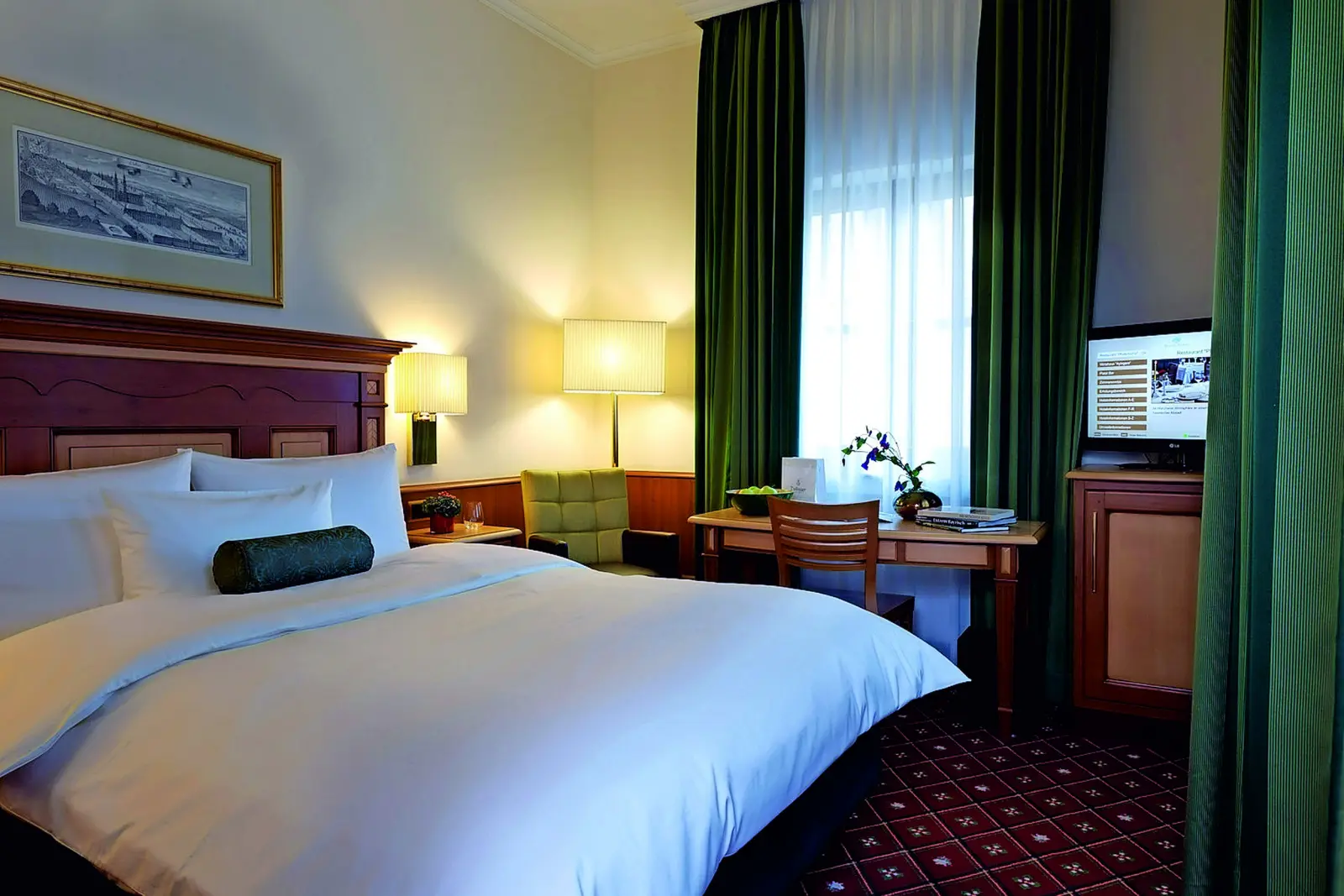
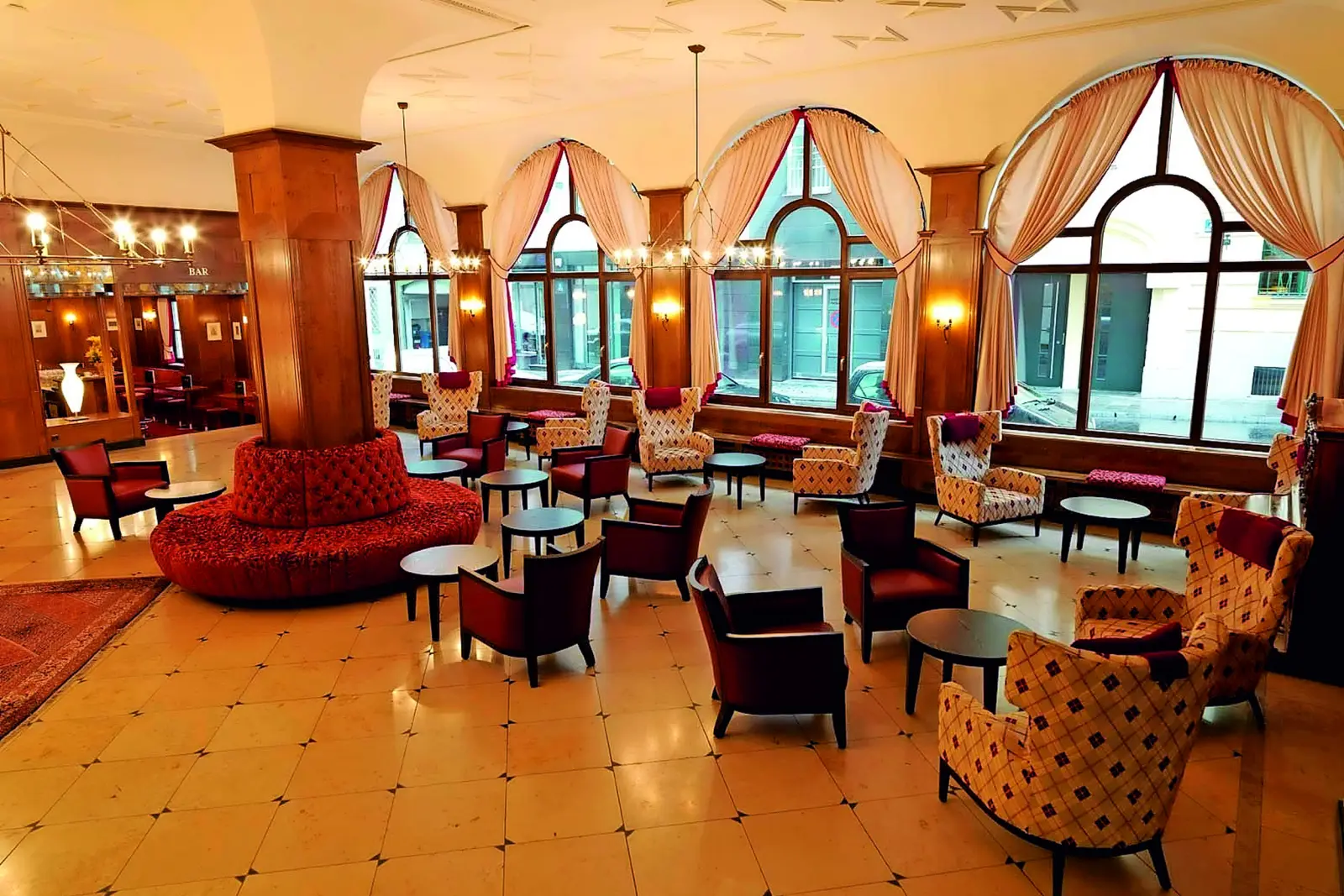
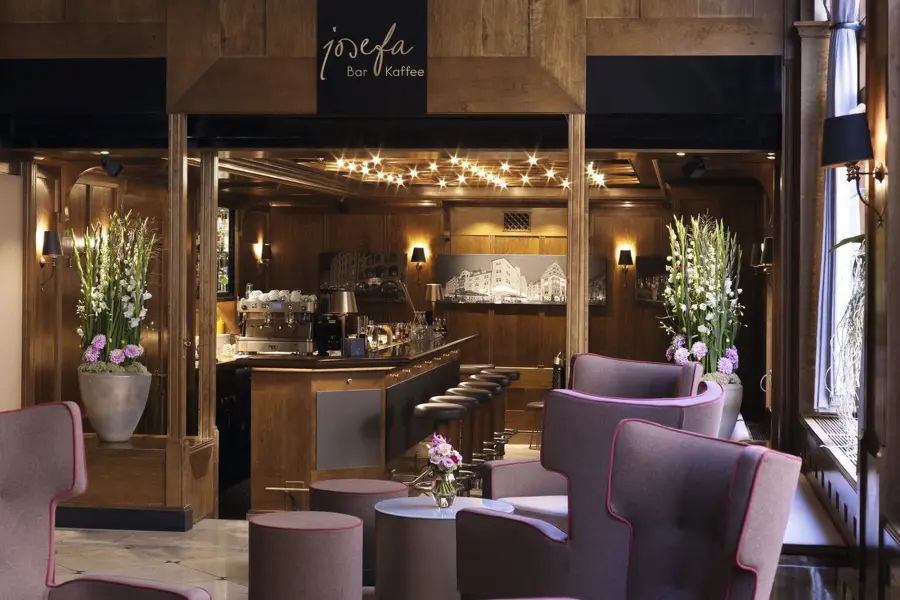
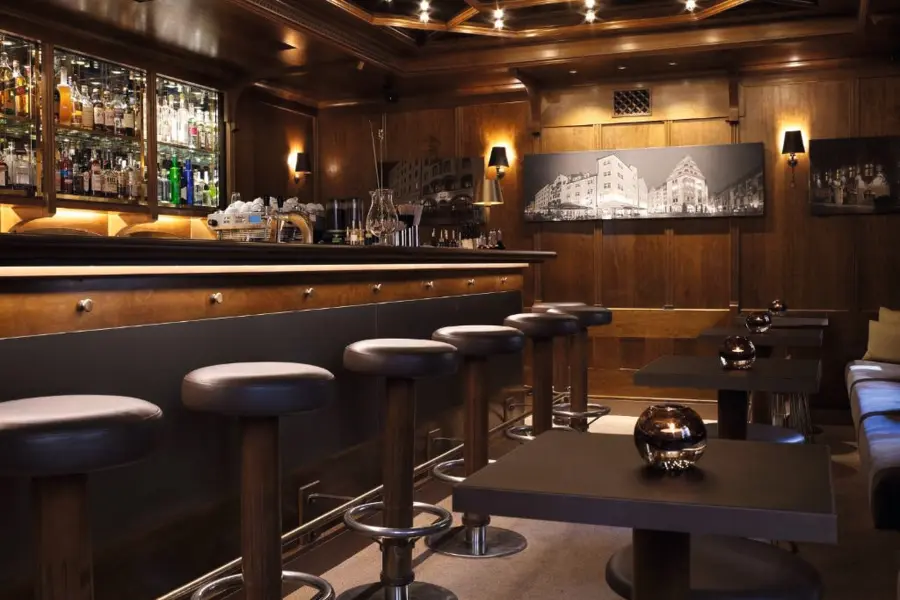
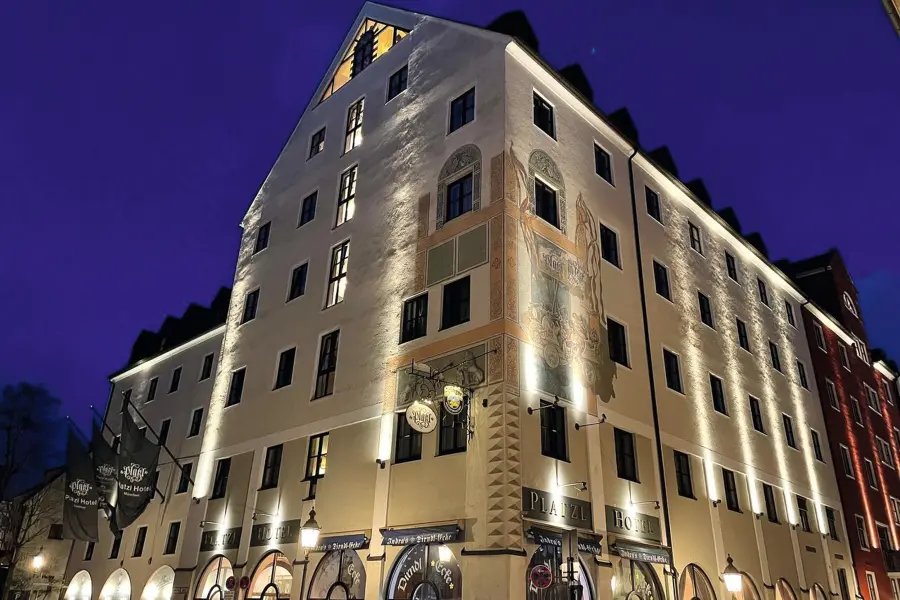
You will stay at the 4* Superior Hotel Platzl in the very heart of Munich, just a three-minute walk from the opera house.

About the operas
Production
Barrie Kosky gives the „operetta of all operettas“ a new guise and turns to its morbid side. The setting is Vienna, city of the golden age of operetta, where Die Fledermaus received its premiere at the Theater an der Wien in 1874. Gabriel von Eisenstein is not the only one for whom the bat's revenge becomes a nightmare. A whole society, an entire city, dances towards the abyss. To take revenge on his friend Eisenstein, Dr Falke, alias the bat, stages a game of mistaken identities at Count Orlofsky's. There a marquis and a chevalier, a countess and aspiring actresses meet for an intoxicating party. Glasses clink, relationships begin to wobble, and there is love, lying and dancing. The revellers celebrate while they still can, true to the motto: „Happy is he who forgets...“.
ACT ONE
The more respectable, the more unfulfilled: Rosalinde von Eisenstein, a Viennese lady of standing, settled in marriage to the dull-witted Gabriel von Eisenstein, is fending off the advances of her former lover, the tenor Alfred. Adele, the Eisensteins' chambermaid, though rather poorly gifted for domestic service, longs for a career in show business, for which her sister Ida, already performing in higher circles, is meant to help her: Adele receives a letter from her, inviting her to an excessive party at Prince Orlofsky's, notorious throughout Vienna. To go, Adele invents an alleged illness of her aunt so that she may be released from the Eisensteins' service for an evening. Everyone will meet there later – naturally in costumes that protect their identities. Gabriel von Eisenstein in particular thirsts for such a night, for he has in fact been sentenced to a short term in prison after behaving abusively, both verbally and physically, towards the authorities. He has one night left before he has to begin his sentence. His lawyer, Dr Blind, managed to secure this brief reprieve in court. Dr Falke, in turn, a close friend of Eisenstein's, has long been waiting for this moment. He will take revenge on Eisenstein – for Eisenstein once humiliated his companion in front of Viennese society by putting him in a bat costume after a night of heavy drinking and letting him wander dead drunk through Vienna. So Falke invites Eisenstein to Orlofsky's as well – with the prospect of extramarital liaisons naturally included. Eisenstein is easily won over, for he is well practised in such things: a luxurious pocket watch has often served him as a lure for younger women on his nocturnal outings. Gabriel bids his wife farewell as he sets off for prison. In keeping with Falke's revenge plan, she too is of course invited to Orlofsky's. Shortly afterwards, Rosalinde finds herself confronted by Alfred, who once again tries to seduce her with his vocal and oral talents. The two are interrupted by the prison governor, Frank. He is looking for the convicted husband in order to escort him to the prison. The logical consequence: Alfred must quickly pass himself off as Eisenstein and let himself be taken to prison in his place, otherwise the tête-à-tête would become public. In the end, everyone is on their way to Orlofsky's party, and even the pedantic prison governor Frank is drawn there.
ACT TWO
Things are wild at Orlofsky's house. Anyone staying here is at best not bourgeois, or willingly leaves all the etiquette of such a world at the cloakroom. This evening will be a Dionysian feast – intoxication by definition. Adele, wearing one of Rosalinde's dresses, meets her sister Ida, who is puzzled by the supposed invitation by letter – likewise written by the vengeful Falke – but is delighted at her sister's arrival and wants to introduce her to society as an actress called Olga. The famous-infamous Prince Orlofsky, meanwhile, is almost bored from so much partying and demands to be entertained. Falke proposes the performance of an impromptu play – its title is The Bat's Revenge. So the intrigue arranged by Falke thickens, and, quite naturally, so does the intoxication of all the guests: Eisenstein arrives, whom Falke introduces as Marquis Renard. The prison governor also appears under his false name, Chevalier Chagrin. The highlight is the appearance of a much-heralded star: the Hungarian countess. This masked countess is none other than Rosalinde, who is appalled that her husband has lied to her and is brazenly flirting here with the chambermaid, whom he takes for an artiste, and finally with her, too, in costume. In the process she manages to steal his pocket watch. The party is still in full swing in the early hours, but Eisenstein finally has to take his leave and makes his way to the prison.
ACT THREE
In this prison the alcohol level is alarmingly high. The jailer Frosch encounters the heavily intoxicated prison governor, who can no longer see straight. One by one, everyone arrives. Ida and Adele continue to work on their still-pending careers as artistes and ask Frank for the help he promised Olga, as Chevalier Chagrin, in an intimate moment. Above all, he is to put in a good word for them with Rosalinde von Eisenstein, since Olga has, after all, taken her dress. He agrees, but in the next moment has to realise that Marquis Renard is at the door. So that Ida and Adele remain undiscovered, they are hidden away. Eisenstein, in turn, discovers firstly that Chevalier Chagrin is in truth the prison governor, and secondly that Eisenstein has already been imprisoned. He begins to rage when he learns how Alfred's mistaken identity came about. He feels betrayed by Rosalinde and thirsts for revenge. She, having arrived in the meantime, tries to talk her way out of the affair with Alfred. At this point, everyone feels deceived by everyone else and is beside themselves with fury. A quarrel breaks out between the Eisensteins and accusations rain down. Rosalinde then holds his watch under his nose. Before the situation escalates, Falke appears with Orlofsky and his entourage and enlightens Eisenstein. That is how the bat takes revenge! The masquerade is over. Everyone has been unmasked and would have to admit to their actions, were it not for the champagne. After all, the blame can be laid at its door. Only one thing is still to come: the hangover …
Source: Bavarian State Opera Munich
Maria Stuarda by Gaetano Donizetti
ACT ONE
The French ambassador woos Queen Elizabeth on behalf of his sovereign. She is not averse to such a union but, as she loves Leicester, asks for time to consider and dismisses the ambassador with a suitable message. Since Leicester betrays no emotion whatsoever, Elizabeth's suspicion that he loves the imprisoned Mary Stuart becomes almost a certainty. When Leicester receives a letter from Mary via Talbot, he cannot hide his dismay from the Queen, who demands the letter from him, in which Mary asks for a meeting with Elizabeth. Although Leicester denies loving Mary and claims merely to admire her beauty, the Queen does not believe him, but nevertheless decides to receive her rival.
ACT TWO
Leicester has hurried ahead to Fotheringhay Castle, where Mary is held captive with her nurse and confidante Anna Kennedy, in order to prepare her for the meeting with Elizabeth. Mary's youth and beauty enrage Elizabeth so much that she not only insults the woman pleading for mercy but also mocks her. Mary, already provoked by her humiliation, calls Queen Elizabeth a bastard and a disgrace to England's honour. Elizabeth rushes off, deeply shaken and wounded, and, to Leicester's dismay, announces Mary's imminent death.
ACT THREE
Elizabeth hesitates to sign the death warrant but is persuaded to do so by Sir Cecil. When Leicester comes to her, Elizabeth holds the sentence triumphantly in her hand and orders him to attend the execution. Mary accepts the sentence, delivered by Cecil and Talbot, without fear and receives absolution from Talbot, who wears a priest's cassock beneath his cloak. Mary forgives her enemies and, at the last cannon shot, walks bravely and composed to the block.
Source: Opera-guide.ch